


Bali's Most Impressive Monuments and Statues Every Traveller Should Visit
 Like
Like
 Save
Save
【Attraction Tickets】Bali Kamandalu Ubud Resort Awana Pool & Lounge Day Pass

【1-Day Tour Routes】Bali Timbis Beach Paragliding Adventure Experience

【1-Day Tour Routes】Bali PADI Diving Course (provided by Bali Hai Cruise)
Bali's Most Impressive Monuments and Statues Every Traveller Should Visit
Bali may be best known today for its luxury resorts and nightlife, but long before it became Asia's party capital, the island drew visitors who cared deeply about its history and culture.
By 2026, that kind of traveller is becoming rarer. Most people hold at least a passing interest in Balinese heritage, yet The Bali Sun has watched a steady decline in tourists who come purely for the island's cultural legacy.
We — like many of Bali's cultural conservationists — hope that over the next few years, more visitors will craft itineraries built around a genuine connection with the island's history.
It's an easy goal to reach, which is why we believe a cultural-tourism renaissance is on the horizon.
For anyone planning a Bali holiday right now, there is one simple way to root an itinerary in the island's culture and history: seek out its most impressive monuments and statues.
Engineering on a Mythic Scale: Garuda Wisnu Kencana
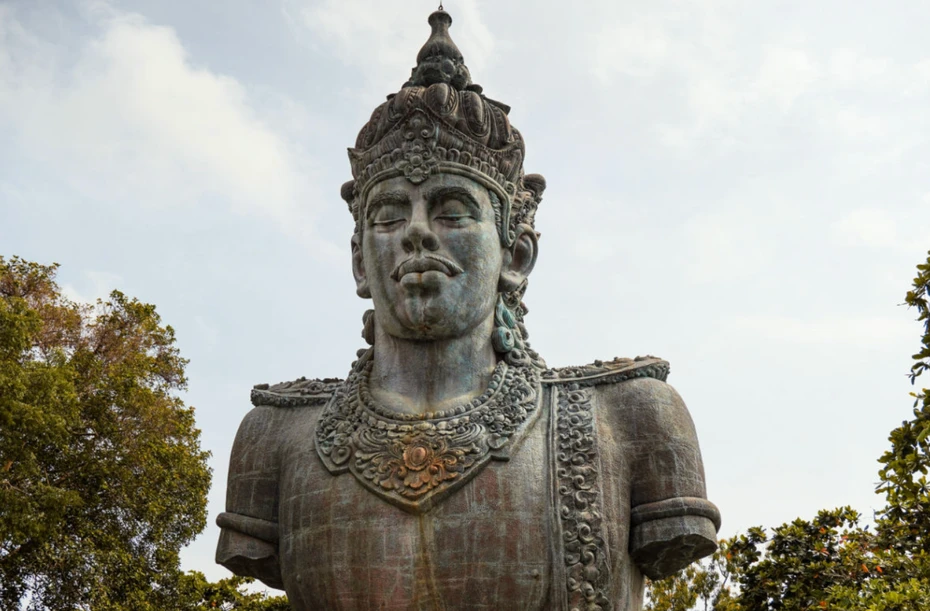
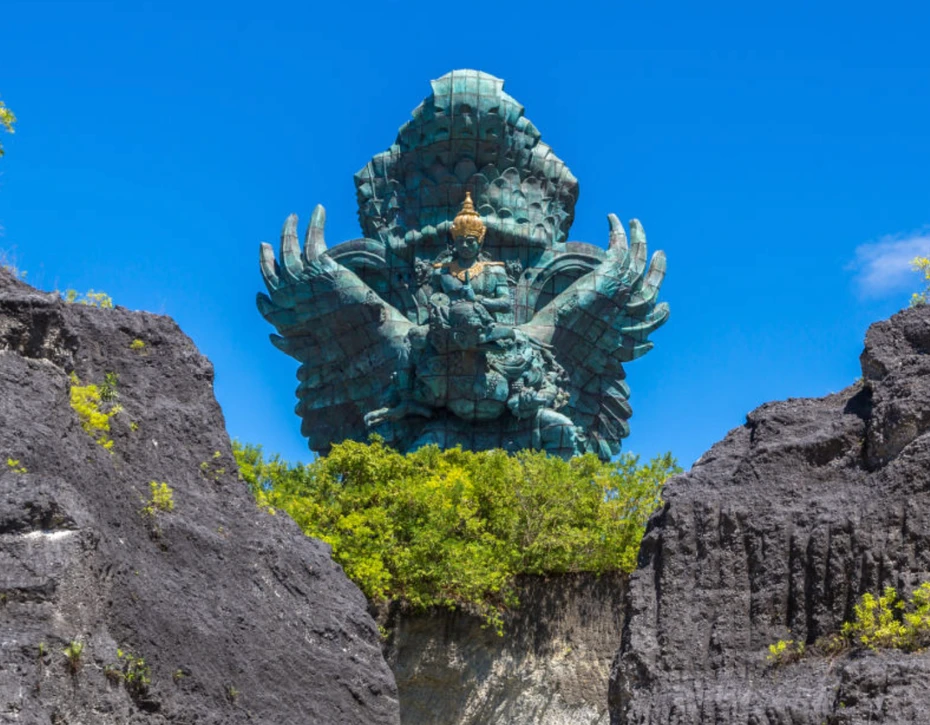
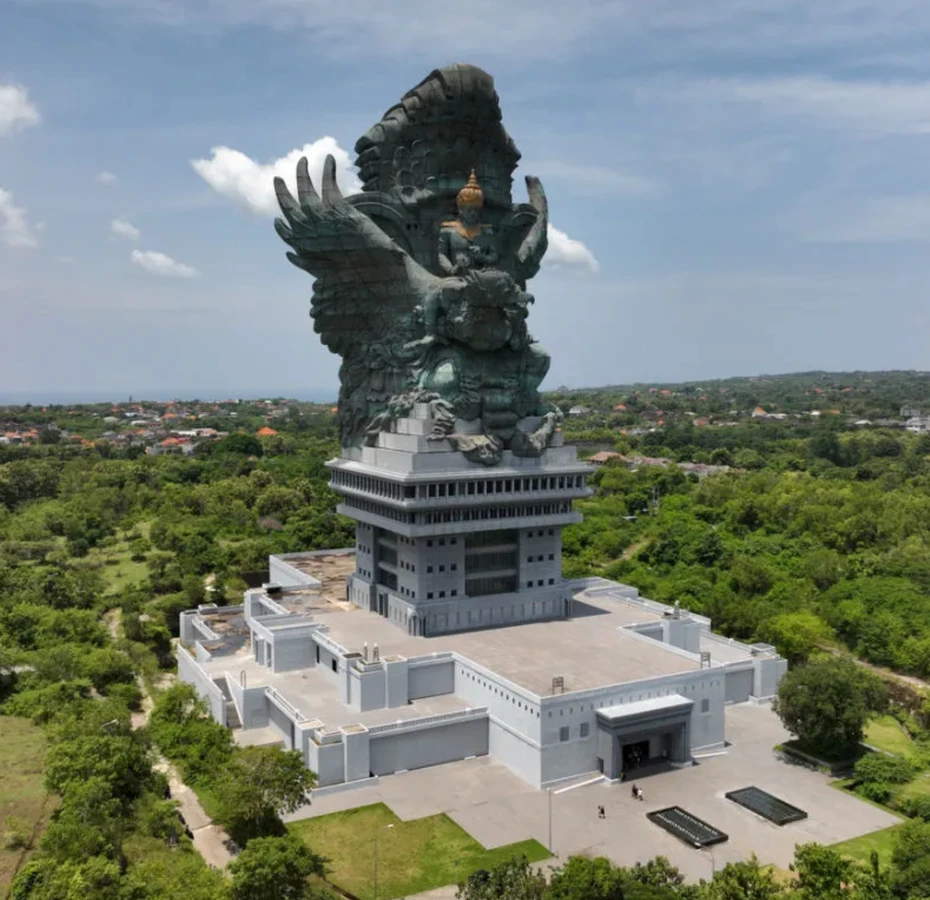
Head into the dramatic limestone country of the southern Bukit Peninsula and you'll find the island's most ambitious modern monument. The Garuda Wisnu Kencana Cultural Park, spread across sixty hectares of a former limestone quarry in Ungasan, is crowned by a colossal copper-and-brass statue that ranks among the tallest monumental sculptures on Earth — easily surpassing the Statue of Liberty in height.
Conceived by the visionary Balinese sculptor Nyoman Nuarta and unveiled after nearly thirty years of complex engineering, the work shows the Hindu deity Lord Wisnu, preserver of the universe, riding his loyal mythical bird-mount Garuda.
The legend behind the sculpture runs deep in the Balinese imagination and traces back to the ancient Sanskrit epic, the Adiparwa. As the story goes, Garuda pledged to become Wisnu's eternal steed in return for a single drop of Amrita — the elixir of immortality — which the great bird needed to free his mother from a lifetime of cruel bondage.
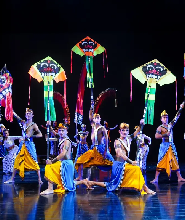
This tale of filial devotion, sacrifice and spiritual liberation resonates across Balinese society as a symbol of freedom from oppression. Visitors to the monument can stand within the vast carved limestone canyons that frame the park's dramatic plazas, a scale-defying stage for afternoon cultural parades, traditional Barong dances and shadow-puppet theatre.
The surrounding Bukit Peninsula region is a natural fit for luxury travellers, history enthusiasts and anyone who appreciates grand architecture paired with coastal calm.
The park is reached by driving roughly twenty-five minutes south of Ngurah Rai International Airport via Jalan Raya Kampus Unud. While many independent travellers rent scooters, hiring an air-conditioned car with a professional local driver is the most comfortable way to tackle the peninsula's steep climbs.
Standout nearby stays include the ultra-luxurious Six Senses Uluwatu, a cliffside resort devoted to sustainable luxury, with terraced ocean-facing villas and holistic wellness treatments that pair beautifully with a culture-focused itinerary.
For a memorable end to a day of sightseeing, the beachside village of Jimbaran lies just minutes away. After dark, Jimbaran Bay's shoreline turns into a vast open-air dining room, where beloved spots like Menega Cafe grill freshly caught red snapper, jumbo prawns and local lobster over coconut-husk fires, basted throughout in a smoky, sweet-and-spicy sambal.
Gateway to the Ancestors: Pura Kehen
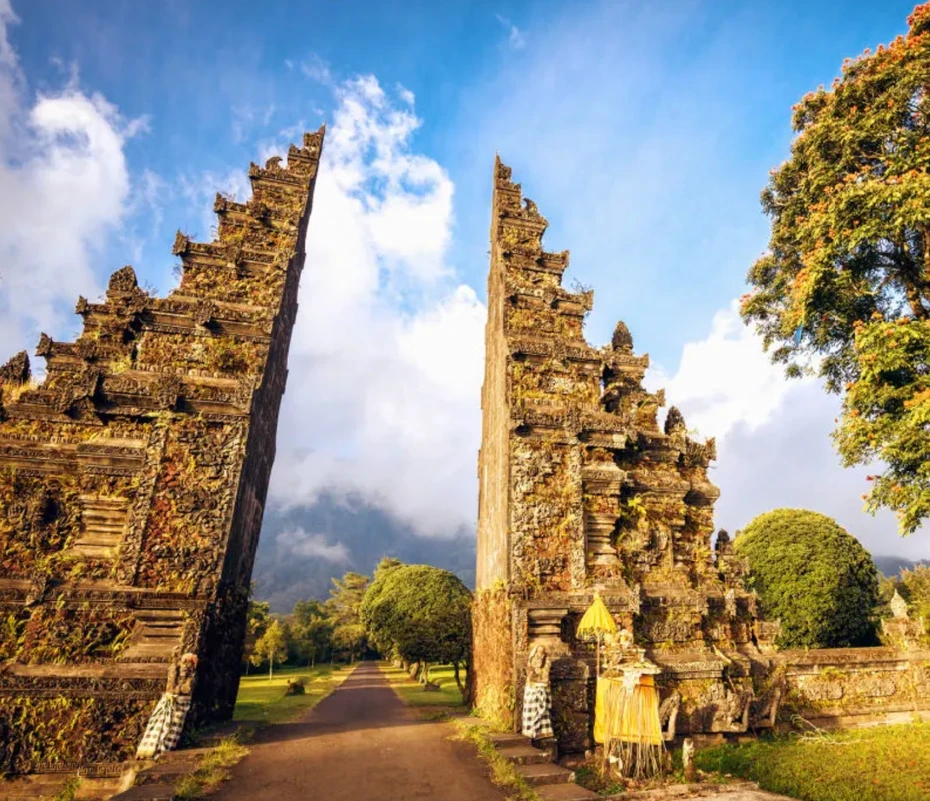
For those willing to venture into the misty northeastern highlands, Bangli Regency holds some of the island's oldest and most architecturally important monuments. The cultural purist's top destination is Pura Kehen, the historic state temple of the old Bangli Kingdom.
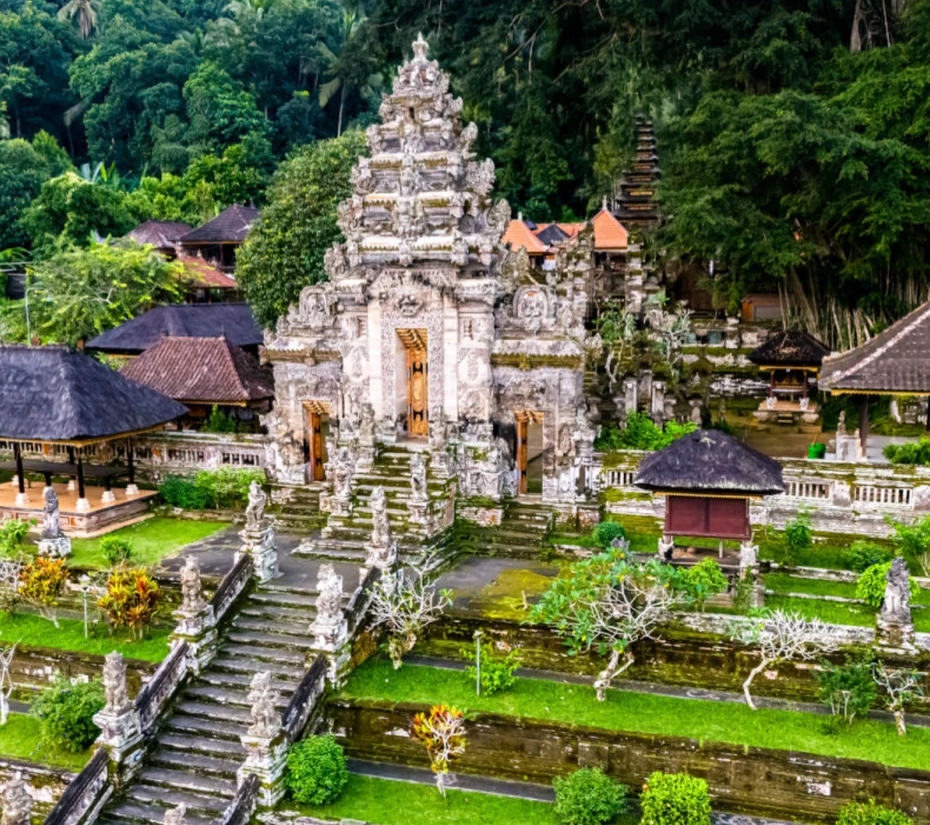
Rising across eight stone terraces on the southern slope of a forested hill, the sanctuary dates back to at least the eleventh century, as recorded in ancient Sanskrit copper inscriptions that describe worship of the fire god and the early workings of the regional monarchy.
The temple is an architectural marvel, embodying the spatial philosophy of Tri Hita Karana — the three sources of prosperity rooted in harmony between people, nature and the divine. Visitors ascend a grand staircase of thirty-eight steps lined with intricate mythical statues from the Ramayana before passing through an ornate "kori agung" stone gateway.
In the main courtyard, a centuries-old banyan tree carries a traditional wooden slit-drum built into its sprawling branches, once used to call villagers together for royal announcements.
The temple's inner walls are inlaid with antique Ming Dynasty Chinese porcelain plates, a vivid reminder of the ancient maritime trade routes that once linked Bali's old kingdoms to mainland Asia.
Reaching Bangli's highlands means a scenic, uphill drive from the southern plains — about an hour from Ubud or ninety minutes from the coastal capital of Denpasar.
The road winds through broad bamboo forests and high-altitude plantations, with a refreshing drop in temperature that makes exploring a pleasure. The area appeals strongly to slow travellers, heritage researchers and anyone seeking spiritual calm away from the coast's busy temple circuits.
To avoid rushing the region, a few nights at the nearby Handara Golf & Resort Bali make for a deeply relaxed stay; set in the adjacent northern highlands, the property pairs a world-class golf course with dramatic volcanic peaks and manicured gardens.
Local food traditions are tied to the fertile volcanic soil, with hillside eateries serving Mujair Nyat-Nyat — fresh tilapia from nearby volcanic lakes seasoned with a fragrant paste of turmeric, galangal, lemongrass and ginger.
Royal Memory in Stone: Gunung Kawi
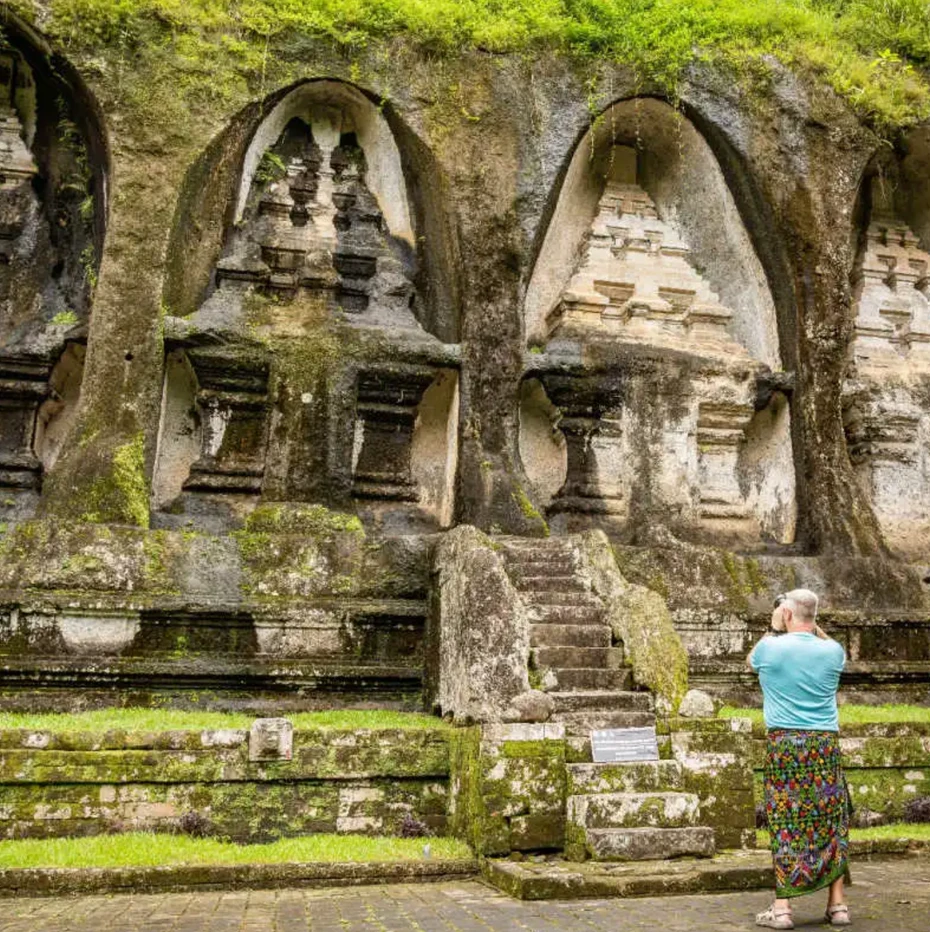
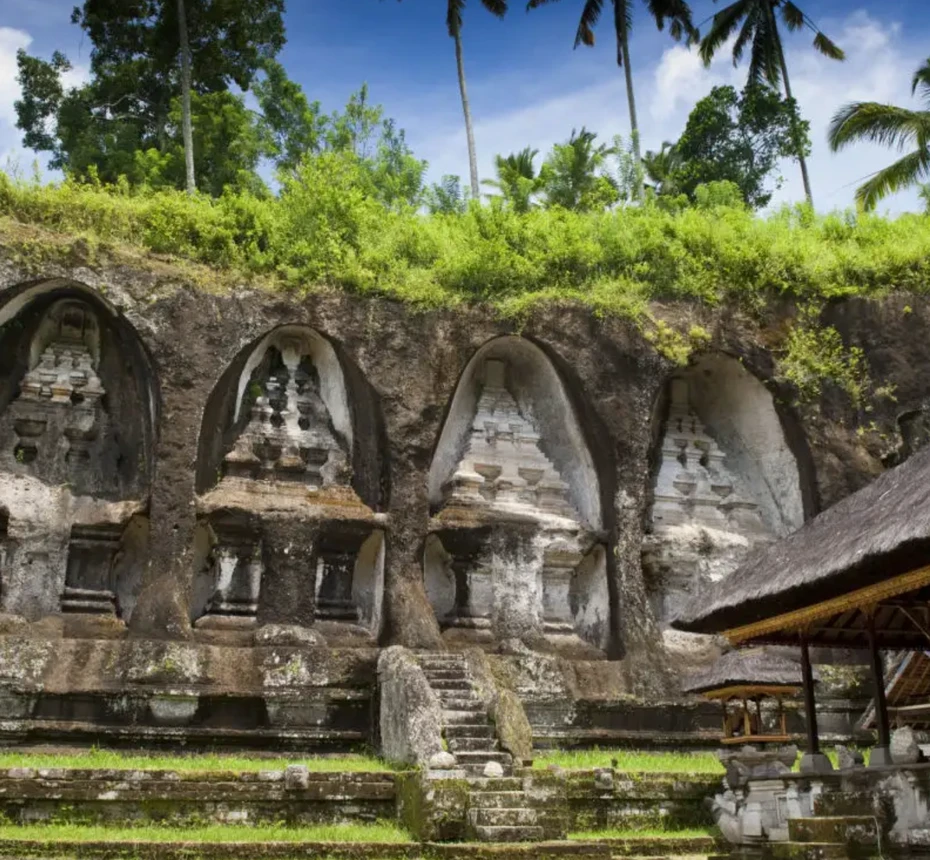
In the lush river valleys of Tampaksiring, just north of Ubud, lies one of Bali's most awe-inspiring archaeological treasures. The Gunung Kawi complex consists of ten towering seven-metre shrines, or candi, carved directly into the sheer cliff faces of a steep river gorge.
Dating to the eleventh-century peak of the Udayana Dynasty, the rock-cut monuments are believed to be funerary memorials honouring King Anak Wungsu and his favoured royal consorts.
Gunung Kawi's importance lies in its singular craftsmanship, marking an era when Balinese builders merged indigenous megalithic traditions with ideas from the Hindu-Javanese kingdoms. Reaching the ancient valley means descending a monumental staircase of more than three hundred steps that winds through terraced rice paddies and coconut groves, accompanied by the rushing waters of the sacred Pakerisan River.
At the bottom of the gorge, a small stone bridge leads to towering cliff carvings that resemble stone temple towers set back into arched niches. The valley hums with historical mystery and remains an active meditation site, where visitors can explore small hand-carved caves once used by ascetics and holy men.
The highland archaeological zone is a dream for hikers, photographers and dedicated history buffs who enjoy mixing physical exploration with cultural discovery.
Ubud makes an ideal base for excursions to Tampaksiring, about thirty minutes to the south. Top nearby stays include the eco-conscious Maya Ubud Resort and Spa, tucked between a river valley and green fields in a serene setting that matches the region's spiritual tone.
Dining around Tampaksiring spans traditional family warungs and modern wellness cafés; travellers often stop at Warung Kayana for its famously tender Balinese-spiced pork ribs, or head into central Ubud for venues like Locavore NXT, which serves avant-garde tasting menus celebrating hyper-local Indonesian ingredients.
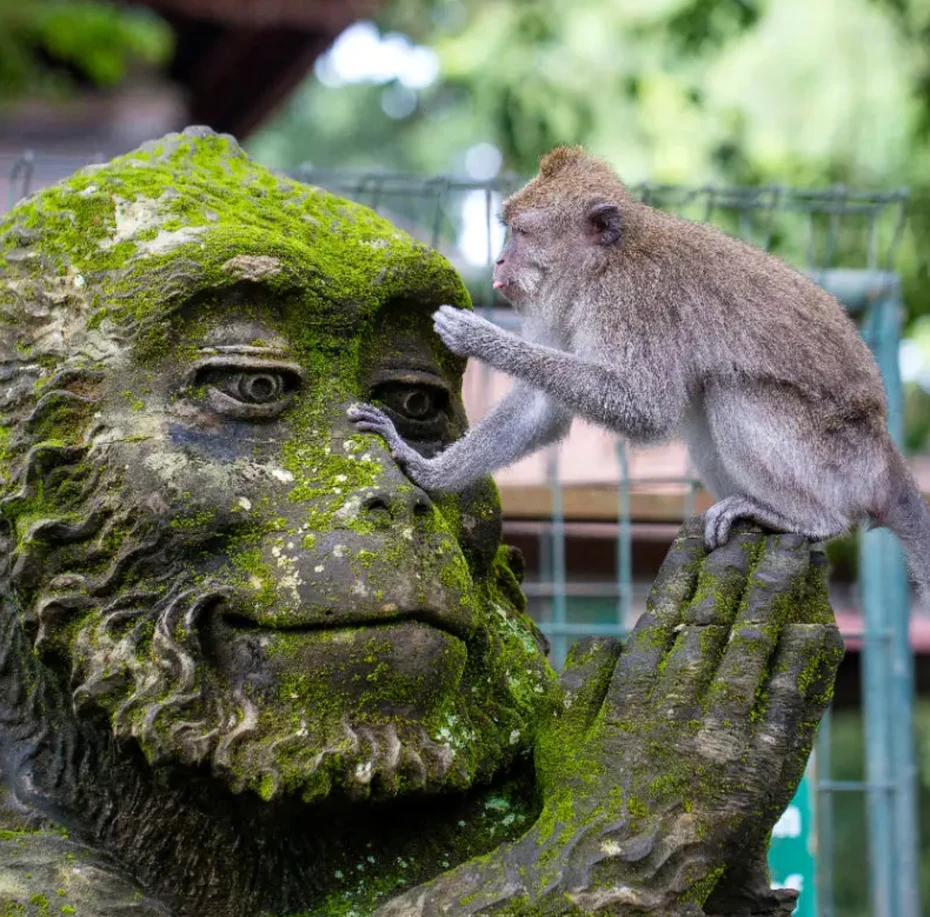
Pairing a morning at Gunung Kawi with an afternoon stroll through the nearby Sacred Monkey Forest Sanctuary delivers a deeply rewarding immersion into central Bali's natural and historical heritage.
Flame of Independence: Bajra Sandhi Monument
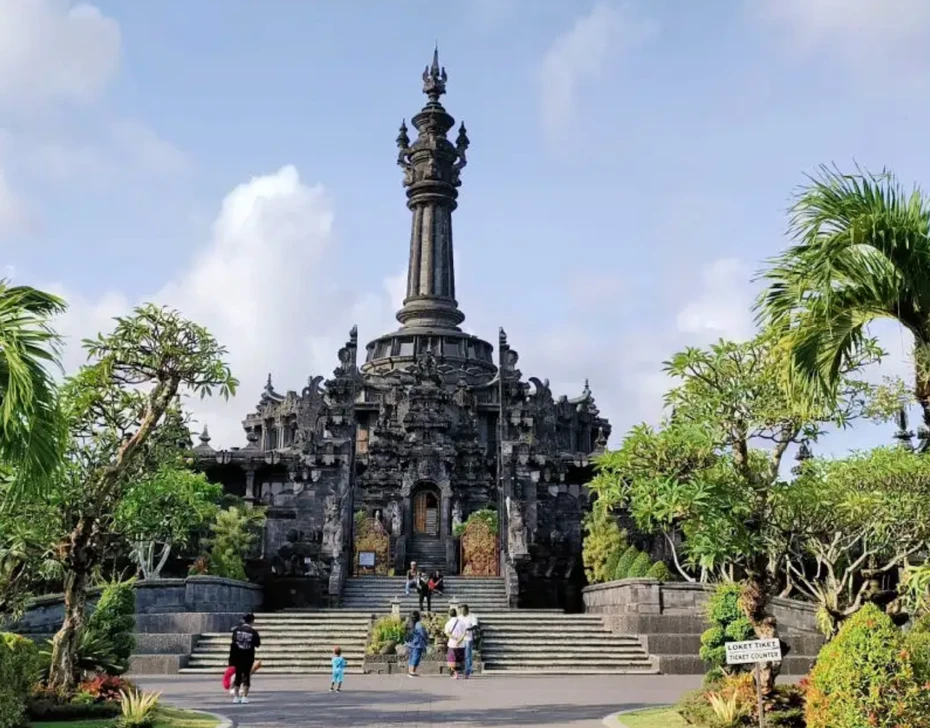
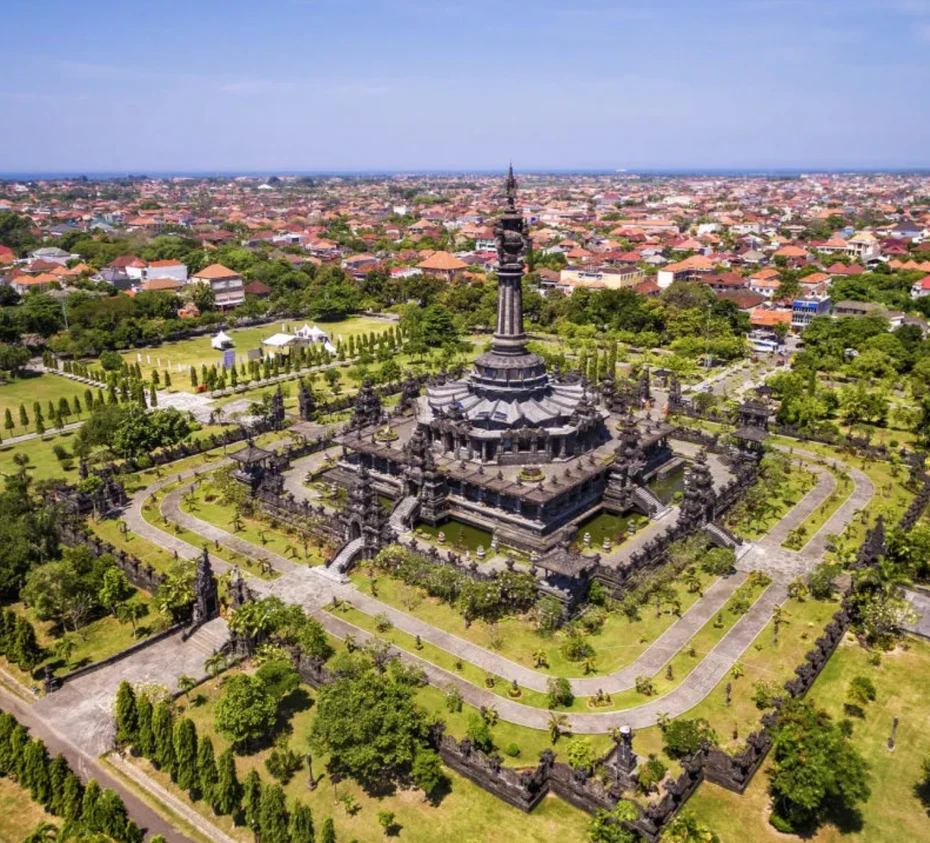
To grasp the province's modern identity and its hard-won road to sovereignty, a visit to the capital Denpasar is essential. Standing proudly at the centre of Renon Square, the Bajra Sandhi Monument is a towering grey diorite structure built to commemorate the struggles of the Balinese people, culminating in the fight for independence from Dutch colonial rule.
Opened in the late twentieth century, the monument is shaped like a "bajra" — the sacred bell used by Balinese Hindu priests in ceremonies — making it a potent fusion of national patriotism and spiritual heritage.
Inside, the monument functions as an educational history museum spread across three levels that mirror the classic Balinese idea of layered universes.
The second floor holds a grand exhibition hall with thirty detailed dioramas that trace the island's story from prehistoric times, through the golden age of the regional kingdoms and the tragic heroism of the "puputan" charges against colonial forces, to the modern struggle for freedom.
A spiral staircase climbs to the monument's highest level, an elevated observation deck with sweeping views over the manicured lawns of Renon Square and Denpasar's busy skyline.
The Bajra Sandhi Monument appeals strongly to families, student travellers and urban explorers seeking a deeper, factual grasp of modern Indonesian history. Just twenty minutes west of the laid-back coastal town of Sanur, it's easily reached by taxi or ride-hailing along Jalan Raya Puputan.
Sanur makes an excellent, relaxed coastal base; well-regarded beachfront stays like the InterContinental Bali Sanur Resort offer spacious suites and tranquil gardens right on the golden sand.
The food scene around Renon and Sanur is notably refined; travellers gather at long-standing Sanur institutions such as Massimo Indonesian and Italian Restaurant for artisan house-made cheeses and fresh salads, or explore the famous Pasar Malam Sindu night market to sample authentic street food like sizzling chicken satay and crisp martabak pancakes.
The Enduring Resonance of Stone and Bronze
Taking the time to look beyond Bali's surface beauty and genuinely engage with its statues and historic shrines deepens any visitor's appreciation of the resilience of local culture.
The artistry of Tampaksiring's mountain valleys, the modern engineering feats of the Bukit Peninsula and the patriotic halls of Denpasar are not performances staged solely for the tourism industry.
They are, instead, an unbroken lineage of devotion, philosophy and communal identity that has weathered centuries of global change.
Approaching these landmarks with curiosity, respect and cultural awareness lets heritage-minded travellers ensure their tropical holiday leaves a lasting and meaningful mark on how they understand the world.

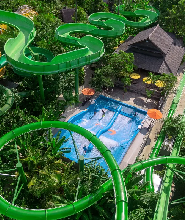
【Attraction Tickets】Bali Island Waterbom Water Park Admission Ticket

%3c/title%3e%3cg%20id='页面-1'%20stroke='none'%20stroke-width='1'%20fill='none'%20fill-rule='evenodd'%3e%3cg%20id='门票-PC版'%20transform='translate(-380.000000,%20-936.000000)'%3e%3cg%20id='biaoti--(1)'%20transform='translate(380.000000,%20936.000000)'%3e%3cpath%20d='M29.2924678,10.0515624%20L20.0320722,0.710853928%20C19.0922202,-0.236951309%2017.5719019,-0.236951309%2016.6316885,0.710853928%20L6.60688654,10.8228609%20C6.22124946,11.3929134%206.21858367,12.1449499%206.60001872,12.7172846%20L16.8634322,23.0726673%20C17.6753259,23.8880583%2018.985272,23.8880583%2019.7934607,23.0726673%20L29.2924678,13.4912761%20C30.2358441,12.5400475%2030.2358441,11.0031561%2029.2924678,10.0515624%20Z'%20id='Fill-1'%20fill='%2338ACFF'%3e%3c/path%3e%3cpath%20d='M7.32022794,13.4600612%20C6.44543588,12.5674601%206.44543588,11.1167505%207.32022794,10.2241494%20L11.8421053,5.60872924%20L10.0964389,3.82734556%20C9.22214789,2.93474446%207.80087842,2.93474446%206.92626857,3.82734556%20L0.655718222,10.2241494%20C-0.218572741,11.1167505%20-0.218572741,12.5674601%200.655718222,13.4600612%20L6.92289751,19.856865%20C7.79714291,20.7494661%209.21895905,20.7494661%2010.0932045,19.856865%20L11.838552,18.0754813%20L7.32022794,13.4600612%20Z'%20id='Fill-3'%20fill='%238AD2FF'%3e%3c/path%3e%3c/g%3e%3c/g%3e%3c/g%3e%3c/svg%3e) Related products
Related products

 More guides








'%20fill='%23FFFFFF'%20fill-rule='nonzero'%3e%3cg%20id='编组-21'%20transform='translate(-0.000000,%203463.000000)'%3e%3cg%20id='编组-20'%20transform='translate(1.000000,%200.000000)'%3e%3cg%20id='icon_笑脸-线'%20transform='translate(816.000000,%2030.000000)'%3e%3cpath%20d='M19.21303,6.10470121%20C18.2037939,3.71403528%2016.2952466,1.8054106%2013.8906615,0.782116903%20C11.4027873,-0.260705634%208.59416917,-0.260705634%206.10629501,0.782116903%20C4.91666008,1.28572876%203.83723503,2.01342091%202.92805438,2.92472122%20C1.04614471,4.80688405%20-0.00655231541,7.35002886%203.06899824e-05,9.99827546%20C-0.00794350862,14.002809%202.39392443,17.6273163%206.10767507,19.2148894%20C7.3381427,19.7347973%208.66245796,20.0018927%2010.0003183,19.9999899%20C12.6582825,20.0035648%2015.2058681,18.9480672%2017.0689021,17.0713743%20C17.9861712,16.1605967%2018.7148343,15.0808699%2019.21303,13.8936713%20C20.2623233,11.4012434%2020.2623233,8.59712911%2019.21303,6.10470121%20L19.21303,6.10470121%20Z%20M18.5864902,9.99690929%20C18.5841901,14.7315867%2014.7315681,18.5841759%2010.0003183,18.5841759%20C5.26630843,18.5841759%201.41506647,14.7315867%201.41506647,9.99690929%20C1.41506647,5.26086575%205.26630843,1.40918727%2010.0003183,1.40918727%20C14.7343282,1.40873188%2018.5864902,5.26086575%2018.5864902,9.99690929%20Z'%20id='形状'%3e%3c/path%3e%3cpath%20d='M6.05201331,8.95224739%20C6.83127798,8.95224739%207.46655809,8.31834619%207.46655809,7.53963133%20C7.46655809,6.76091647%206.83127798,6.12747066%206.05201331,6.12747066%20C5.27320865,6.12747066%204.64160864,6.7600057%204.64160864,7.53735438%20C4.63743561,7.91062437%204.78408398,8.270074%205.04894631,8.53577921%20C5.31380865,8.80148442%205.67492953,8.95141992%206.05201331,8.95224739%20L6.05201331,8.95224739%20Z%20M13.9500034,8.97957071%20C14.726508,8.97957071%2015.359488,8.3456695%2015.359488,7.56832083%20C15.359488,6.78687364%2014.726508,6.15297242%2013.9500034,6.15297242%20C13.1711987,6.15297242%2012.5359186,6.78687362%2012.5359186,7.56832083%20C12.5359186,8.3456695%2013.1711987,8.97957071%2013.9500034,8.97957071%20Z%20M15.1078601,12.139969%20C14.7924485,11.915954%2014.3543915,11.9800345%2014.1179087,12.2847826%20C13.1707387,13.5571389%2011.6301499,14.3135397%2010.0003183,14.3135397%20C8.37002671,14.3135397%206.82943792,13.5571389%205.88410798,12.2870596%20C5.64808665,11.9810113%205.20927089,11.9156996%204.89277659,12.1395136%20C4.57951444,12.3738969%204.51529087,12.8142693%204.74879203,13.1267965%20C5.34212496,13.922147%206.11410645,14.5700647%207.00378343,15.0193924%20C8.88588273,15.9647756%2011.1106138,15.9647756%2012.9927131,15.0193924%20C13.8835983,14.5695462%2014.6569145,13.92123%2015.2518446,13.1254304%20C15.4818519,12.8130337%2015.4179099,12.375405%2015.1078601,12.139969%20L15.1078601,12.139969%20Z'%20id='形状'%3e%3c/path%3e%3c/g%3e%3c/g%3e%3c/g%3e%3c/g%3e%3c/g%3e%3c/svg%3e)

'%3e%3cg%20id='编组-26'%20transform='translate(1682.000000,%201051.000000)'%3e%3ccircle%20id='椭圆形'%20fill='url(%23linearGradient-1)'%20cx='30'%20cy='30'%20r='30'%3e%3c/circle%3e%3cg%20id='客服'%20transform='translate(14.000000,%2012.000000)'%20fill='%23FFFFFF'%20fill-rule='nonzero'%3e%3cpath%20d='M23.139712,32.8694615%20C23.0243663,33.9087509%2022.2900098,34.7706057%2021.2891951,35.0412633%20L18.0476443,35.9180006%20C16.7097139,36.2683278%2015.3422219,35.4641013%2014.9844463,34.1165239%20C14.6266708,32.7689465%2015.4124959,31.3822989%2016.7447036,31.0104172%20L19.9862544,30.1336799%20C20.8331551,29.9041779%2021.737345,30.1363734%2022.3726019,30.7464927%20C24.8216791,29.7521616%2026.8802401,27.9748183%2028.2328984,25.6867646%20L27.4067797,25.6867646%20C24.9354154,25.6867646%2022.9322035,23.6648493%2022.9322035,21.1704104%20L22.9322035,16.6540562%20C22.9322035,14.1596173%2024.9354154,12.137702%2027.4067797,12.137702%20L28.5254238,12.137702%20C28.6867882,12.137702%2028.8464746,12.1461701%2029.0036441,12.1631065%20C27.293517,7.07656252%2022.3505086,3.38726566%2016.5,3.38726566%20C10.6494919,3.38726566%205.70648348,7.07656252%203.99635639,12.1631065%20C4.15352588,12.1461701%204.31321232,12.137702%204.47457672,12.137702%20L5.59322077,12.137702%20C8.06458514,12.137702%2010.067797,14.1596173%2010.067797,16.6540562%20L10.067797,21.1704104%20C10.067797,23.6648493%208.06458514,25.6867646%205.59322077,25.6867646%20L4.47457672,25.6867646%20C2.00321236,25.6867646%200,23.6648493%200,21.1704104%20L0,16.6540562%20C0,16.5360664%200.00447510069,16.4192058%200.0131445921,16.3034742%20C0.00433474352,16.232501%200,16.1610399%200,16.0895119%20C0,7.18862456%207.40150888,0%2016.5,0%20C25.5984916,0%2033,7.18862456%2033,16.0895119%20C33,16.1620558%2032.9955254,16.2334707%2032.9868559,16.3034742%20C32.9955254,16.4192058%2033,16.5360664%2033,16.6540562%20L33,21.1704104%20C33,22.6797195%2032.2667288,24.0157136%2031.1399746,24.8359964%20C29.6761543,28.5069437%2026.7841947,31.4109054%2023.139712,32.8694615%20L23.139712,32.8694615%20Z'%20id='路径'%3e%3c/path%3e%3c/g%3e%3c/g%3e%3c/g%3e%3c/g%3e%3c/svg%3e)
'%3e%3cg%20id='编组-28'%20transform='translate(1682.000000,%201121.000000)'%3e%3ccircle%20id='椭圆形备份-2'%20fill='url(%23linearGradient-1)'%20cx='30'%20cy='30'%20r='30'%3e%3c/circle%3e%3cg%20id='电话'%20transform='translate(13.000000,%2013.000000)'%20fill='%23FFFFFF'%20fill-rule='nonzero'%3e%3cpath%20d='M33.6821921,30.2461546%20L32.0856631,31.837563%20C31.4335904,32.4881786%2030.6232405,33.0074431%2029.671634,33.384009%20C28.6256363,33.8004465%2027.4505065,34%2026.1947808,34%20C21.3730567,34.0022143%2013.753793,29.5065467%208.70469844,24.4718343%20C2.33929522,18.1242322%20-1.47463066,9.39000338%200.541004575,4.33791995%20C0.835564238,3.59815655%201.24448921,2.94070137%201.73113444,2.36314497%20L1.72981321,2.36054124%20L1.83325883,2.1935543%20C1.87930807,2.11808567%201.93305159,2.04984529%201.99367338,1.98933826%20L3.66897177,0.32016841%20C4.09355739,-0.106722803%204.78347984,-0.106722803%205.20794884,0.32016841%20L5.96226253,1.07186222%20L12.5334689,7.62589538%20C12.9579768,8.04769573%2012.9579768,8.73480209%2012.5321477,9.15901188%20L10.7752431,10.9133656%20L9.58048888,12.1050469%20C9.58048888,12.1050469%208.95526852,16.1008029%2013.4058785,20.5383729%20C17.856333,24.9739609%2021.8452848,24.3695125%2021.8452848,24.3695125%20L24.8151302,21.4071946%20C25.2396381,20.9829848%2025.9304932,20.9829848%2026.3537575,21.4071946%20L33.6808708,28.7105899%20C34.1061559,29.1351883%2034.1061559,29.8218672%2033.6821921,30.2461546%20L33.6821921,30.2461546%20Z'%20id='路径'%3e%3c/path%3e%3c/g%3e%3c/g%3e%3c/g%3e%3c/g%3e%3c/svg%3e)
'%3e%3cg%20id='编组-27'%20transform='translate(1682.000000,%201191.000000)'%3e%3ccircle%20id='椭圆形备份-3'%20fill='url(%23linearGradient-1)'%20cx='30'%20cy='30'%20r='30'%3e%3c/circle%3e%3cg%20id='手机'%20transform='translate(15.000000,%2012.000000)'%20fill='%23FFFFFF'%20fill-rule='nonzero'%3e%3cpath%20d='M25,0%20C27.7613637,0%2030,2.21624998%2030,4.95000002%20L30,31.05%20C30,33.78375%2027.7613637,36%2025,36%20L5,36%20C2.23863635,36%200,33.78375%200,31.05%20L0,4.95000002%20C0,2.21625003%202.23863635,0%205,0%20L25,0%20Z%20M18.6363636,29.25%20L11.3636364,29.25%20C10.6105208,29.25%2010,29.8544156%2010,30.6%20C10,31.3455844%2010.6105208,31.95%2011.3636364,31.95%20L18.6363636,31.95%20C19.3894792,31.95%2020,31.3455844%2020,30.6%20C20,29.8544156%2019.3894792,29.25%2018.6363636,29.25%20Z%20M25,2.7%20L4.99999999,2.7%20C4.39723523,2.7%203.81915815,2.93705289%203.39293911,3.35900975%20C2.96672007,3.78096661%202.72727273,4.35326292%202.72727273,4.95000002%20L2.72727273,25.2%20L27.2727273,25.2%20L27.2727273,4.95000002%20C27.2727273,4.35326292%2027.0332799,3.78096661%2026.6070609,3.35900975%20C26.1808418,2.93705289%2025.6027648,2.7%2025,2.7%20L25,2.7%20Z'%20id='形状'%3e%3c/path%3e%3c/g%3e%3c/g%3e%3c/g%3e%3c/g%3e%3c/svg%3e)