


Singapore Itinerary: Best Neighbourhoods and 3-Day Guide
 Like
Like
 Save
SaveChoosing a central area to stay will help you make the most of your time in the city. Finding a hotel in one of these convenient areas will make getting around for this Singapore itinerary straightforward:

* Marina Bay – Fantastic views, beautiful riverfront area, close to top Singapore attractions like Gardens by the Bay, expensive.
* Bugis – Convenient location between Marina Bay and the Kampong Glam and Little India neighbourhoods. You can walk to most places on this itinerary from here. Budget and luxury accommodation available.
* Chinatown – Good value hotels not too far from Marina Bay.
* Orchard Road – A good option if you want to be close to shopping malls and embassies (where visas for Thailand and Indonesia can be obtained). The Singapore Botanic Gardens are close by, but it is less convenient for the other areas in this itinerary.
Recommended Hotels in Singapore
Andaz Singapore, Bugis
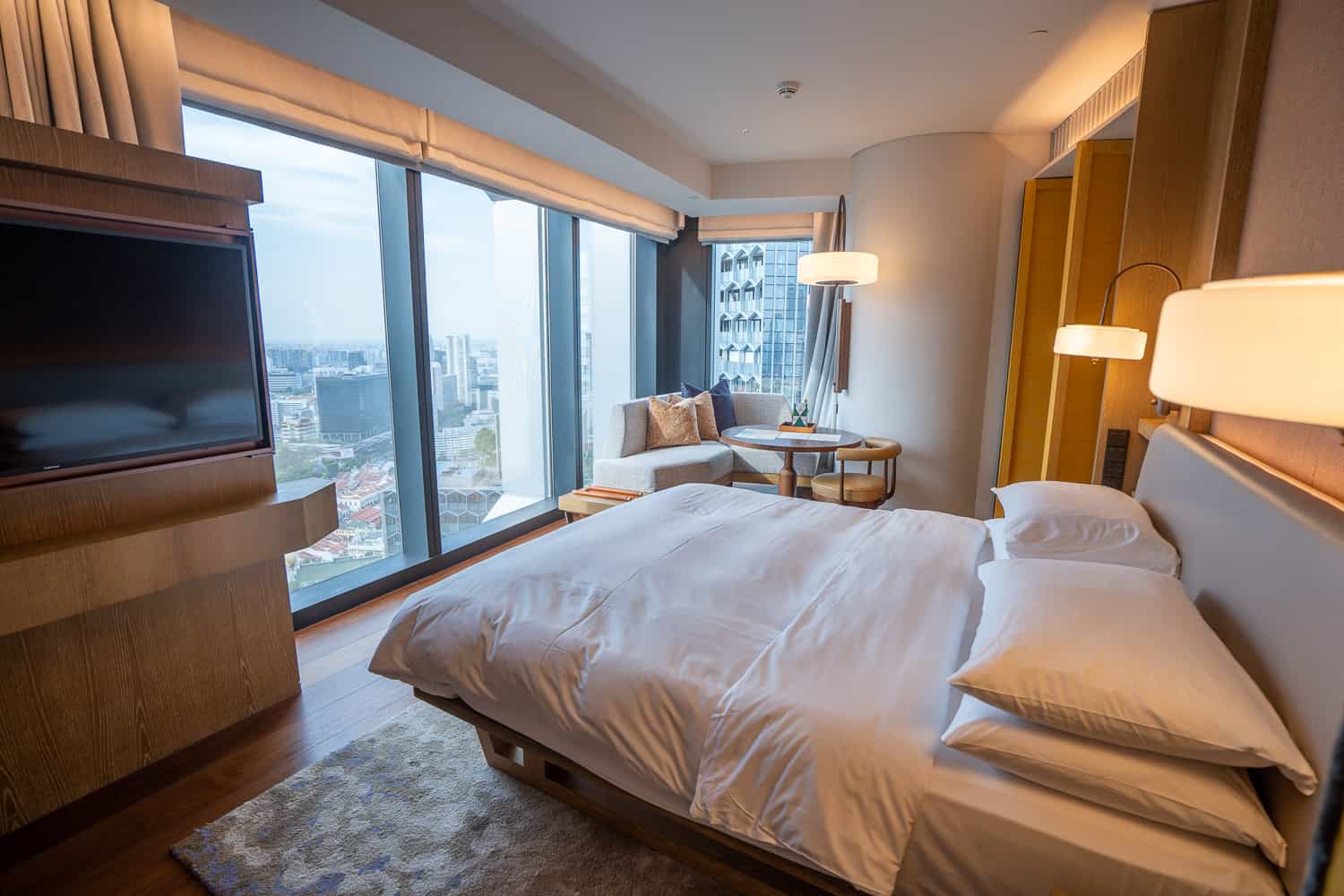
Andaz Singapore is one of the favourite places to stay in Singapore. This hip hotel is in the perfect location just a few minutes’ walk from trendy Haji Lane and the traditional architecture of Kampong Glam. Little India and the Colonial District are also walkable, and Marina Bay is a 30-minute walk or two stops on the MRT (the hotel is connected to Bugis station).
The spacious, stylish rooms feature fantastic city views from floor-to-ceiling windows, a free minibar, and mod cons like a Nespresso machine. The bed is exceptionally comfortable. The views from the infinity pool and rooftop bar (which features cool teepees) are also stunning. Guests can help themselves to complimentary hot and cold non-alcoholic drinks and snacks in the Sunroom all day. While room rates do not include breakfast, ordering room service or visiting nearby cafes are popular options.
Treetops Executive Residences, Orchard Road
Treetops Executive Residences offers one and two-bedroom apartments with a four-night minimum stay, making it ideal for longer trips and families. The apartments are spacious and comfortable, equipped for self-catering, and a buffet breakfast is included in the rate. There is a lovely large pool surrounded by tropical vegetation.
Marina Bay Sands
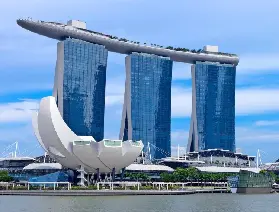
Marina Bay Sands is the ultimate splurge—Singapore’s most famous hotel featuring the world’s largest rooftop infinity pool. Visitors can expect crowds and high prices, but the views might just be worth it.
Budget Accommodation
There are plenty of hostels and capsule hotels in the Bugis and Kampong Glam area, such as Beary Best and The Hive Singapore Hostel. Chinatown is another good area to look for budget hotels, with The Bohemian Chic as a well-reviewed, stylish hostel and Hotel Mono offering attractive ensuite double rooms.
Singapore Transport
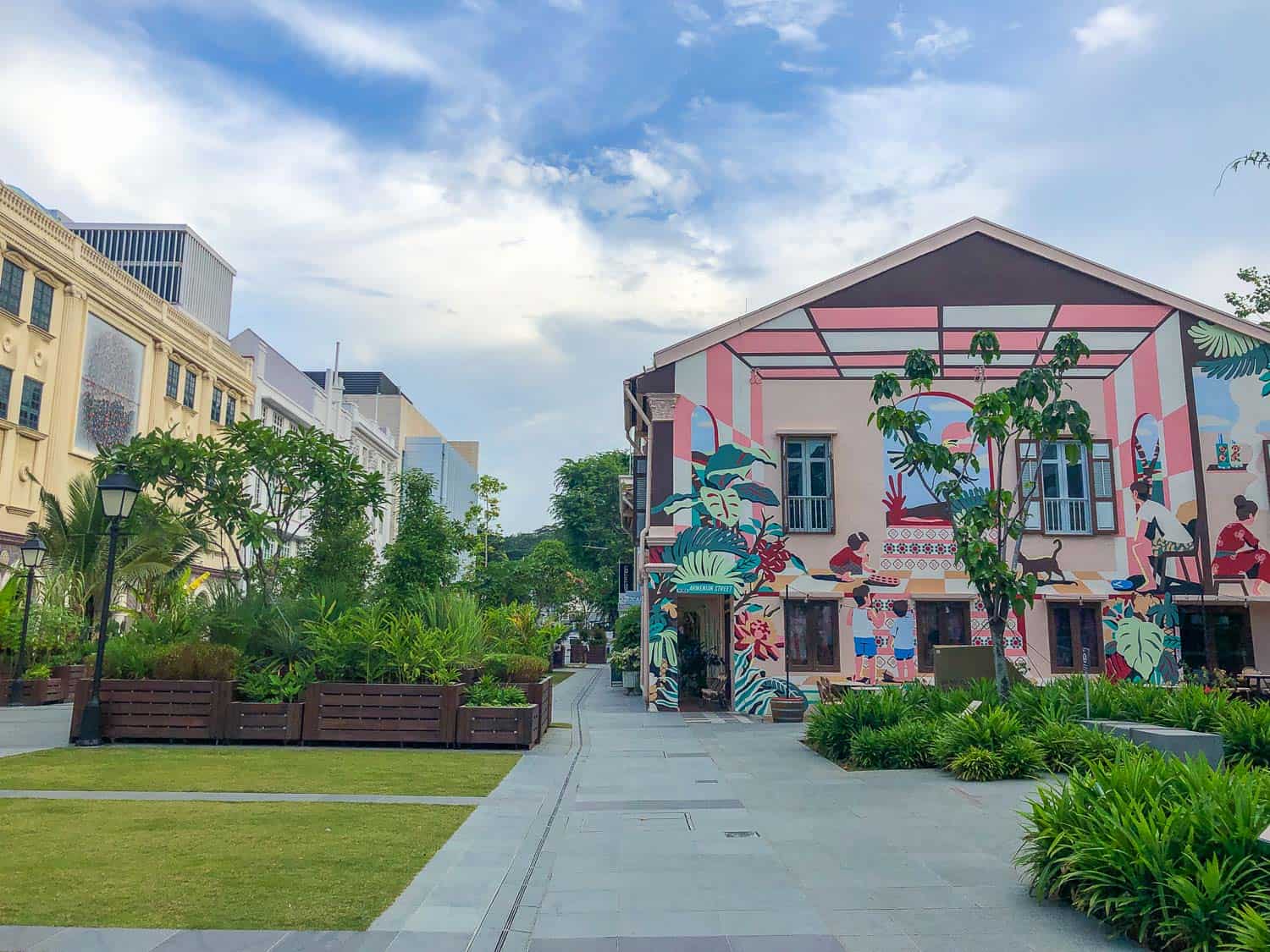
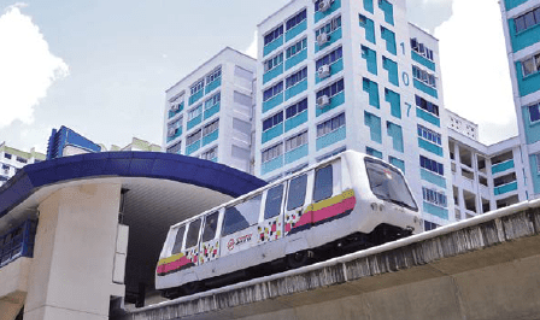
Singapore is easy to get around. It is a walkable city where you can discover cool streets like Armenian Street on foot, though the heat makes walking exhausting and sweaty in the middle of the day. You can save energy by hopping on the clean, efficient, inexpensive MRT metro. Single trip tickets are no longer available. You can simply use contactless using your phone, or purchase a SimplyGo EZ-Link card for S$10, which includes S$5 credit. Downloading the EZ-Link app makes topping up even easier. You could also consider a Singapore Tourist Pass which costs S$29 for unlimited rides for three days (with a $10 refundable deposit).
Another easy option for getting around is the Grab app (there is no Uber here) which makes calling a taxi simple. Short rides cost around S$10. Google Maps is useful for walking or public transport directions. Singapore’s Changi Airport is one of the best in the world, so allow time before your flight to explore the various gardens and attractions. You can take the MRT to or from the airport, but taking a taxi costs about S$15–20 to Bugis.
The Best Time to Visit Singapore
You can visit Singapore at any time of year. Travelling to Singapore in many different months reveals that the weather is always the same—hot, very humid, lots of clouds, and often short rain showers that are usually quite refreshing. It has the least amount of seasonal variation of anywhere, so the weather should not heavily influence your decision on when to visit. Check for local holidays and festivals when planning your trip, as vibrant events like Chinese New Year in January or February or Diwali in Little India in October or November offer great experiences.
Singapore Itinerary Day 1: Colonial District and Gardens by the Bay
National Museum of Singapore
The National Museum of Singapore is a great introduction to the history of the city and provides an understanding of its multicultural roots. Housed in an elegant Neo-Palladian building dating back to 1887 with a towering Indian rubber tree outside, it is recommended to start on the second floor at the Glass Rotunda. The Story of the Forest exhibit was created by the Japanese digital arts collective teamLab and brings drawings of the Malay Peninsula’s jungle and wildlife to life, leading you down to the first floor to explore the history of Singapore. Visitors typically spend about two hours here.
Transport: You can walk from the Andaz Singapore Hotel in Bugis (20 minutes). The nearest MRT station is Bencoolen Station on the Downtown line.
Explore the Colonial District
The National Museum is located in Singapore’s Colonial District, so after your visit you can take a stroll through the area and visit 150-year-old St Andrew’s Cathedral and Fort Canning Park. The Long Bar in the historic Raffles Hotel is where the Singapore Sling cocktail was invented and peanut shells are brushed onto the floor. For lunch, you can head to the Raffles City shopping mall food court or walk down to Boat Quay (about 20 minutes) for a meal overlooking the river, such as burgers at Servus or tapas at My Little Spanish Place, alongside plenty of seafood options.
Gardens by the Bay
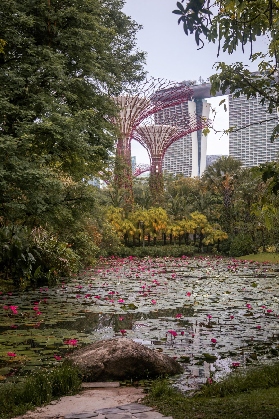
Gardens by the Bay is one of the best places to visit in Singapore and an essential highlight. Try to avoid visiting on weekends if possible as it gets very busy. Arriving around 2 or 3 pm gives you plenty of time before sunset. The extensive outdoor gardens are free, but the paid conservatories are superb. The two main climate-controlled domes—the Flower Dome and the Cloud Forest—are worth visiting, but if you have limited time, choose the Cloud Forest which features a large waterfall. A combined ticket is S$46 adults / S$32 children. A newer attraction is Floral Fantasy with suspended flower displays, a vivarium, and a 4D ride, costing S$24 adults / S$16 children.
Transport: Gardens by the Bay is a 30-minute walk from the Colonial District, or the nearest MRT station is Bayfront on the Downtown and Circle lines.
Marina Bay Sands Sunset Cocktail
Before sunset, heading to Marina Bay Sands provides an amazing view from the top as the sun goes down and the city’s skyscrapers light up. Paying for a drink at the CÉ LA VI SkyBar (minimum spend S$30) offers better value than paying S$35 adults / S$31 children for the Sands SkyPark Observation Deck. Sunset times vary from 6:50 pm to 7:20 pm depending on the time of year. On Sundays there can be a long queue, so allow time and consider making a reservation for a seated table. Note that the bar has a dress code from 6 pm—no swimwear, singlets, sleeveless shirts, or flip-flops are allowed for men (though there is no dress code on Mondays, Tuesdays, and Sundays). Swimming in the famous infinity pool requires staying at Marina Bay Sands.
Supertrees Light Show
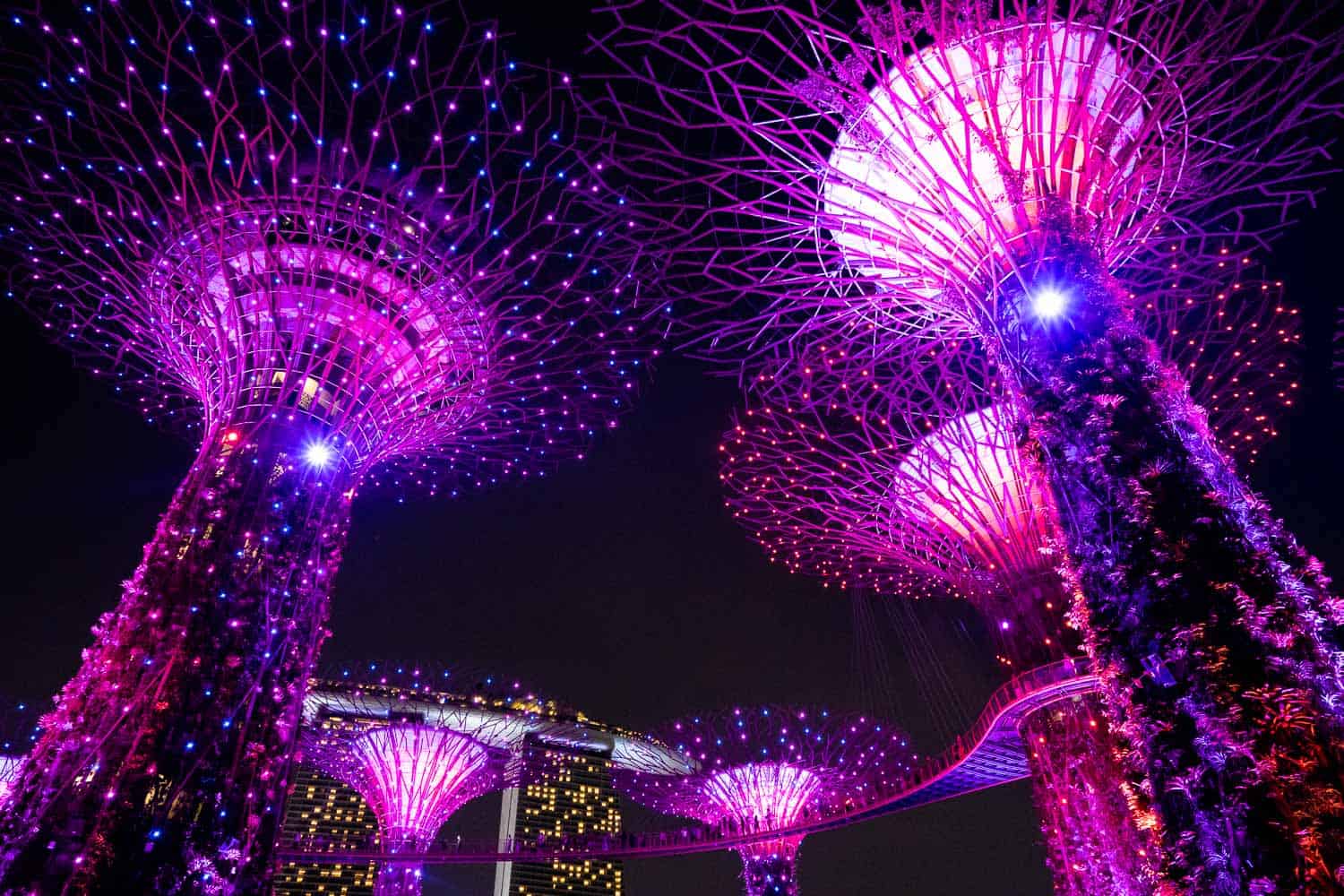
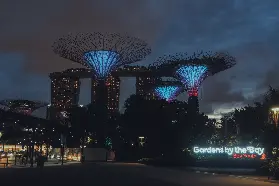
Once darkness has fallen, heading back down to Gardens by the Bay reveals the Supertree Grove. These futuristic trees are 25 to 50 metres tall with steel trunks covered in orchids, ferns, and climbing tropical flowers, generating solar power and collecting rainwater. The Supertrees are best seen lit up at night during the free Garden Rhapsody light and sound show, which takes place at 7:45 pm and 8:45 pm every day. You can also get up close on the 22-metre-high OCBC Skyway (costing S$14 adults / S$10 children, last admission 8 pm). Satay by the Bay is the best place in the area for a quick, inexpensive dinner, featuring local specialities like satay, chicken rice, BBQ seafood, and Indian masala dosa for S$3, located a 10-minute walk from the Supertree Grove.
Day 2: Exploring Singapore’s Multicultural Heritage and Marina Bay at Night
Singapore is a multicultural city where the three largest ethnic groups are Chinese, Malay, and Indian. On your second day, exploring three distinct ethnic neighbourhoods is recommended.
Little India
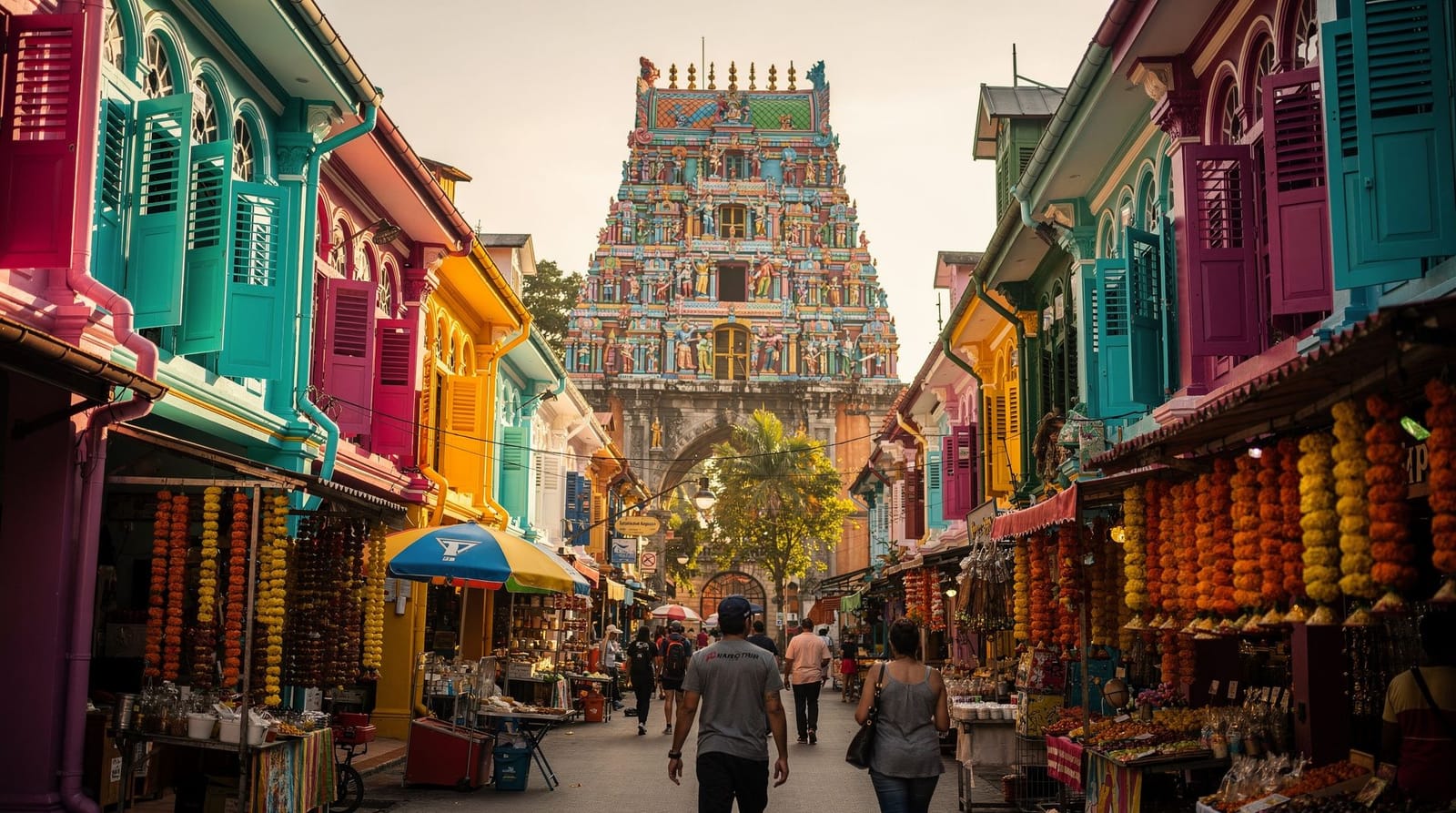
Little India is home to Singapore’s Indian community and is a vibrant, bustling place with smells of incense and sounds of Bollywood music. Here you can explore colourful wooden shophouses, visit the extravagant Sri Veeramakaliamman Hindu Temple, take photos of Tan Teng Niah (a vibrant Chinese villa built in 1900), shop at Tekka Centre and Mustafa Centre (open 24 hours), and eat cheap South Indian food at vegetarian restaurants like Komala Vilas (trying a masala dosa or thali on a banana leaf). If visiting in January or February during the Thaipusam Hindu Festival, you can witness the kavadi procession where devotees pierce their bodies and tongues with spikes.
Transport: Little India is walkable from Bugis, or you can take the Downtown or North East MRT line to Little India station.
Kampong Glam
Kampong Glam is Singapore’s Muslim and Arab neighbourhood, established as the oldest urban quarter allocated by Sir Stamford Raffles in 1822 to the Malay and Arab communities. It features colourful shophouses, mosques, and a hipster scene with trendy cafes and bars. Highlights include the golden domes of Sultan Mosque, the Malay Heritage Centre, boutique shopping and street art on Haji Lane, and live music at pavement bars on Haji Lane in the evenings.
Transport: It takes about 15 minutes to walk between Little India and Kampong Glam, or you can take the MRT Downtown line to Bugis.
Chinatown
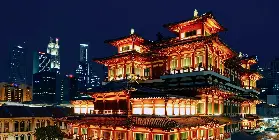
Chinatown was once home to Singapore’s Chinese immigrant community and is now a mix of cultures with historic temples and trendy cafes. It is the only Chinatown in the world with a Buddhist temple, mosque, and Hindu temple on one street. You can visit the Buddha Tooth Relic Temple, Thian Hock Keng Temple, and Sri Mariamman Temple, as well as grab a bite at Chinatown Food Street (11 am–11 pm) or Maxwell Hawker Centre, and eat vegetarian Peranakan dishes at Whole Earth.
Transport: Take the MRT Downtown line from Bugis to Chinatown station.
Riverside and Marina Bay Walk
Spending two nights in the Marina Bay area allows time to take a walk along the Singapore River at night when it is cooler and skyline views are fantastic. The walk takes about 40 minutes plus stops. Alternatively, you can take a Singapore River Cruise on a bumboat from Clarke Quay (40 minutes, S$20). Start the walk in Clarke Quay and continue through Boat Quay, passing Fernando Botero’s Bird sculpture and the Fullerton Hotel to the Merlion fountain (representing a fishing village origins and Singapura / Lion City name). From here you can see Spectra, a free light and water show taking place every night at 8 pm and 9 pm (and 10 pm on Fridays and Saturdays). Crossing the Esplanade Bridge leads to the Esplanade Outdoor Theatre and Makansutra Gluttons Bay food court, while the Helix Bridge connects to Marina Bay Sands.
Singapore Flyer
A ride on this huge observation wheel takes 30 minutes, reaching 165 metres at the top with spectacular views of Marina Bay Sands, Gardens by the Bay, and downtown skyscrapers. The nearest MRT station is Promenade.
Day 3: Universal Studios Singapore or Shopping and Gardens
On your final day, you can choose the activity that interests you most. Theme park fans can visit Universal Studios Singapore on Sentosa Island, while shoppers can explore Orchard Road malls and the Singapore Botanic Gardens.
Universal Studios Singapore
Universal Studios Singapore offers movie-themed rides and attractions. Arriving at the 10 am park opening helps avoid crowds, allowing you to finish by mid-afternoon. Highlights include Battlestar Galactica, Revenge of the Mummy, Transformers, Jurassic Park, and Waterworld. Full price adult tickets cost from S$83. Take the MRT to HarbourFront station and connect to the Sentosa Express monorail to Waterfront station (S$4 one way), or take the cable car to Imbiah and ride the monorail one stop.
Singapore Botanic Gardens and Orchard Road Shopping
Shopping fans can head to Orchard Road for air-conditioned malls like ION Orchard, while the nearby Singapore Botanic Gardens date back to 1859 and are a UNESCO World Heritage Site. Open from 5 am to midnight with free entry, the gardens feature the National Orchid Garden (opening at 8:30 am, last entry 6 pm, with 1,000 species and 2,000 hybrids). You can take the MRT to Botanic Gardens MRT Station.
Practical Tips
* Transport Cards: Use contactless payment with your phone or purchase a SimplyGo EZ-Link card for S$10 (includes S$5 credit). Alternatively, consider the Singapore Tourist Pass for S$29 for unlimited three-day rides ($10 refundable deposit).
* Getting Around: The MRT is clean, efficient, and inexpensive. Single trip tickets are unavailable; use contactless or EZ-Link cards. Taxis via Grab cost around S$10 for short rides.
* Weather: Singapore is hot, very humid, cloudy, and subject to short rain showers year-round. Seasonal variation is minimal.
* Airport Transfer: Taxis from Changi Airport to Bugis cost about S$15–20.
Source
%3c/title%3e%3cg%20id='页面-1'%20stroke='none'%20stroke-width='1'%20fill='none'%20fill-rule='evenodd'%3e%3cg%20id='门票-PC版'%20transform='translate(-380.000000,%20-936.000000)'%3e%3cg%20id='biaoti--(1)'%20transform='translate(380.000000,%20936.000000)'%3e%3cpath%20d='M29.2924678,10.0515624%20L20.0320722,0.710853928%20C19.0922202,-0.236951309%2017.5719019,-0.236951309%2016.6316885,0.710853928%20L6.60688654,10.8228609%20C6.22124946,11.3929134%206.21858367,12.1449499%206.60001872,12.7172846%20L16.8634322,23.0726673%20C17.6753259,23.8880583%2018.985272,23.8880583%2019.7934607,23.0726673%20L29.2924678,13.4912761%20C30.2358441,12.5400475%2030.2358441,11.0031561%2029.2924678,10.0515624%20Z'%20id='Fill-1'%20fill='%2338ACFF'%3e%3c/path%3e%3cpath%20d='M7.32022794,13.4600612%20C6.44543588,12.5674601%206.44543588,11.1167505%207.32022794,10.2241494%20L11.8421053,5.60872924%20L10.0964389,3.82734556%20C9.22214789,2.93474446%207.80087842,2.93474446%206.92626857,3.82734556%20L0.655718222,10.2241494%20C-0.218572741,11.1167505%20-0.218572741,12.5674601%200.655718222,13.4600612%20L6.92289751,19.856865%20C7.79714291,20.7494661%209.21895905,20.7494661%2010.0932045,19.856865%20L11.838552,18.0754813%20L7.32022794,13.4600612%20Z'%20id='Fill-3'%20fill='%238AD2FF'%3e%3c/path%3e%3c/g%3e%3c/g%3e%3c/g%3e%3c/svg%3e) Related products
Related products


 More guides




'%20fill='%23FFFFFF'%20fill-rule='nonzero'%3e%3cg%20id='编组-21'%20transform='translate(-0.000000,%203463.000000)'%3e%3cg%20id='编组-20'%20transform='translate(1.000000,%200.000000)'%3e%3cg%20id='icon_笑脸-线'%20transform='translate(816.000000,%2030.000000)'%3e%3cpath%20d='M19.21303,6.10470121%20C18.2037939,3.71403528%2016.2952466,1.8054106%2013.8906615,0.782116903%20C11.4027873,-0.260705634%208.59416917,-0.260705634%206.10629501,0.782116903%20C4.91666008,1.28572876%203.83723503,2.01342091%202.92805438,2.92472122%20C1.04614471,4.80688405%20-0.00655231541,7.35002886%203.06899824e-05,9.99827546%20C-0.00794350862,14.002809%202.39392443,17.6273163%206.10767507,19.2148894%20C7.3381427,19.7347973%208.66245796,20.0018927%2010.0003183,19.9999899%20C12.6582825,20.0035648%2015.2058681,18.9480672%2017.0689021,17.0713743%20C17.9861712,16.1605967%2018.7148343,15.0808699%2019.21303,13.8936713%20C20.2623233,11.4012434%2020.2623233,8.59712911%2019.21303,6.10470121%20L19.21303,6.10470121%20Z%20M18.5864902,9.99690929%20C18.5841901,14.7315867%2014.7315681,18.5841759%2010.0003183,18.5841759%20C5.26630843,18.5841759%201.41506647,14.7315867%201.41506647,9.99690929%20C1.41506647,5.26086575%205.26630843,1.40918727%2010.0003183,1.40918727%20C14.7343282,1.40873188%2018.5864902,5.26086575%2018.5864902,9.99690929%20Z'%20id='形状'%3e%3c/path%3e%3cpath%20d='M6.05201331,8.95224739%20C6.83127798,8.95224739%207.46655809,8.31834619%207.46655809,7.53963133%20C7.46655809,6.76091647%206.83127798,6.12747066%206.05201331,6.12747066%20C5.27320865,6.12747066%204.64160864,6.7600057%204.64160864,7.53735438%20C4.63743561,7.91062437%204.78408398,8.270074%205.04894631,8.53577921%20C5.31380865,8.80148442%205.67492953,8.95141992%206.05201331,8.95224739%20L6.05201331,8.95224739%20Z%20M13.9500034,8.97957071%20C14.726508,8.97957071%2015.359488,8.3456695%2015.359488,7.56832083%20C15.359488,6.78687364%2014.726508,6.15297242%2013.9500034,6.15297242%20C13.1711987,6.15297242%2012.5359186,6.78687362%2012.5359186,7.56832083%20C12.5359186,8.3456695%2013.1711987,8.97957071%2013.9500034,8.97957071%20Z%20M15.1078601,12.139969%20C14.7924485,11.915954%2014.3543915,11.9800345%2014.1179087,12.2847826%20C13.1707387,13.5571389%2011.6301499,14.3135397%2010.0003183,14.3135397%20C8.37002671,14.3135397%206.82943792,13.5571389%205.88410798,12.2870596%20C5.64808665,11.9810113%205.20927089,11.9156996%204.89277659,12.1395136%20C4.57951444,12.3738969%204.51529087,12.8142693%204.74879203,13.1267965%20C5.34212496,13.922147%206.11410645,14.5700647%207.00378343,15.0193924%20C8.88588273,15.9647756%2011.1106138,15.9647756%2012.9927131,15.0193924%20C13.8835983,14.5695462%2014.6569145,13.92123%2015.2518446,13.1254304%20C15.4818519,12.8130337%2015.4179099,12.375405%2015.1078601,12.139969%20L15.1078601,12.139969%20Z'%20id='形状'%3e%3c/path%3e%3c/g%3e%3c/g%3e%3c/g%3e%3c/g%3e%3c/g%3e%3c/svg%3e)

'%3e%3cg%20id='编组-26'%20transform='translate(1682.000000,%201051.000000)'%3e%3ccircle%20id='椭圆形'%20fill='url(%23linearGradient-1)'%20cx='30'%20cy='30'%20r='30'%3e%3c/circle%3e%3cg%20id='客服'%20transform='translate(14.000000,%2012.000000)'%20fill='%23FFFFFF'%20fill-rule='nonzero'%3e%3cpath%20d='M23.139712,32.8694615%20C23.0243663,33.9087509%2022.2900098,34.7706057%2021.2891951,35.0412633%20L18.0476443,35.9180006%20C16.7097139,36.2683278%2015.3422219,35.4641013%2014.9844463,34.1165239%20C14.6266708,32.7689465%2015.4124959,31.3822989%2016.7447036,31.0104172%20L19.9862544,30.1336799%20C20.8331551,29.9041779%2021.737345,30.1363734%2022.3726019,30.7464927%20C24.8216791,29.7521616%2026.8802401,27.9748183%2028.2328984,25.6867646%20L27.4067797,25.6867646%20C24.9354154,25.6867646%2022.9322035,23.6648493%2022.9322035,21.1704104%20L22.9322035,16.6540562%20C22.9322035,14.1596173%2024.9354154,12.137702%2027.4067797,12.137702%20L28.5254238,12.137702%20C28.6867882,12.137702%2028.8464746,12.1461701%2029.0036441,12.1631065%20C27.293517,7.07656252%2022.3505086,3.38726566%2016.5,3.38726566%20C10.6494919,3.38726566%205.70648348,7.07656252%203.99635639,12.1631065%20C4.15352588,12.1461701%204.31321232,12.137702%204.47457672,12.137702%20L5.59322077,12.137702%20C8.06458514,12.137702%2010.067797,14.1596173%2010.067797,16.6540562%20L10.067797,21.1704104%20C10.067797,23.6648493%208.06458514,25.6867646%205.59322077,25.6867646%20L4.47457672,25.6867646%20C2.00321236,25.6867646%200,23.6648493%200,21.1704104%20L0,16.6540562%20C0,16.5360664%200.00447510069,16.4192058%200.0131445921,16.3034742%20C0.00433474352,16.232501%200,16.1610399%200,16.0895119%20C0,7.18862456%207.40150888,0%2016.5,0%20C25.5984916,0%2033,7.18862456%2033,16.0895119%20C33,16.1620558%2032.9955254,16.2334707%2032.9868559,16.3034742%20C32.9955254,16.4192058%2033,16.5360664%2033,16.6540562%20L33,21.1704104%20C33,22.6797195%2032.2667288,24.0157136%2031.1399746,24.8359964%20C29.6761543,28.5069437%2026.7841947,31.4109054%2023.139712,32.8694615%20L23.139712,32.8694615%20Z'%20id='路径'%3e%3c/path%3e%3c/g%3e%3c/g%3e%3c/g%3e%3c/g%3e%3c/svg%3e)
'%3e%3cg%20id='编组-28'%20transform='translate(1682.000000,%201121.000000)'%3e%3ccircle%20id='椭圆形备份-2'%20fill='url(%23linearGradient-1)'%20cx='30'%20cy='30'%20r='30'%3e%3c/circle%3e%3cg%20id='电话'%20transform='translate(13.000000,%2013.000000)'%20fill='%23FFFFFF'%20fill-rule='nonzero'%3e%3cpath%20d='M33.6821921,30.2461546%20L32.0856631,31.837563%20C31.4335904,32.4881786%2030.6232405,33.0074431%2029.671634,33.384009%20C28.6256363,33.8004465%2027.4505065,34%2026.1947808,34%20C21.3730567,34.0022143%2013.753793,29.5065467%208.70469844,24.4718343%20C2.33929522,18.1242322%20-1.47463066,9.39000338%200.541004575,4.33791995%20C0.835564238,3.59815655%201.24448921,2.94070137%201.73113444,2.36314497%20L1.72981321,2.36054124%20L1.83325883,2.1935543%20C1.87930807,2.11808567%201.93305159,2.04984529%201.99367338,1.98933826%20L3.66897177,0.32016841%20C4.09355739,-0.106722803%204.78347984,-0.106722803%205.20794884,0.32016841%20L5.96226253,1.07186222%20L12.5334689,7.62589538%20C12.9579768,8.04769573%2012.9579768,8.73480209%2012.5321477,9.15901188%20L10.7752431,10.9133656%20L9.58048888,12.1050469%20C9.58048888,12.1050469%208.95526852,16.1008029%2013.4058785,20.5383729%20C17.856333,24.9739609%2021.8452848,24.3695125%2021.8452848,24.3695125%20L24.8151302,21.4071946%20C25.2396381,20.9829848%2025.9304932,20.9829848%2026.3537575,21.4071946%20L33.6808708,28.7105899%20C34.1061559,29.1351883%2034.1061559,29.8218672%2033.6821921,30.2461546%20L33.6821921,30.2461546%20Z'%20id='路径'%3e%3c/path%3e%3c/g%3e%3c/g%3e%3c/g%3e%3c/g%3e%3c/svg%3e)
'%3e%3cg%20id='编组-27'%20transform='translate(1682.000000,%201191.000000)'%3e%3ccircle%20id='椭圆形备份-3'%20fill='url(%23linearGradient-1)'%20cx='30'%20cy='30'%20r='30'%3e%3c/circle%3e%3cg%20id='手机'%20transform='translate(15.000000,%2012.000000)'%20fill='%23FFFFFF'%20fill-rule='nonzero'%3e%3cpath%20d='M25,0%20C27.7613637,0%2030,2.21624998%2030,4.95000002%20L30,31.05%20C30,33.78375%2027.7613637,36%2025,36%20L5,36%20C2.23863635,36%200,33.78375%200,31.05%20L0,4.95000002%20C0,2.21625003%202.23863635,0%205,0%20L25,0%20Z%20M18.6363636,29.25%20L11.3636364,29.25%20C10.6105208,29.25%2010,29.8544156%2010,30.6%20C10,31.3455844%2010.6105208,31.95%2011.3636364,31.95%20L18.6363636,31.95%20C19.3894792,31.95%2020,31.3455844%2020,30.6%20C20,29.8544156%2019.3894792,29.25%2018.6363636,29.25%20Z%20M25,2.7%20L4.99999999,2.7%20C4.39723523,2.7%203.81915815,2.93705289%203.39293911,3.35900975%20C2.96672007,3.78096661%202.72727273,4.35326292%202.72727273,4.95000002%20L2.72727273,25.2%20L27.2727273,25.2%20L27.2727273,4.95000002%20C27.2727273,4.35326292%2027.0332799,3.78096661%2026.6070609,3.35900975%20C26.1808418,2.93705289%2025.6027648,2.7%2025,2.7%20L25,2.7%20Z'%20id='形状'%3e%3c/path%3e%3c/g%3e%3c/g%3e%3c/g%3e%3c/g%3e%3c/svg%3e)