

Dresden Frauenkirche (Interior) & Zwinger Palace Guided Tour

 67

 17



 4.5/5


German‑speaking guide, audio guide
Other personal expenses, tips
Uniform price for all ages
(1) Free for children aged 0‑16;
(2) Children aged 0‑16 must be accompanied by a paying adult;
Voucher is valid only on the specified date (and time)
Please present the e‑voucher

Full refund available if cancelled at least 36 hours (local time) before the activity date
In eastern Germany, the River Elbe flows quietly, bearing witness to the destruction and rebirth of a city. Dresden, known as the 'Florence on the Elbe', is world‑famous for its Baroque architecture. Among its treasures, the Dresden Frauenkirche and the Zwinger Palace are not only masterpieces of architectural art but also symbols of humanity's ability to rebuild civilisation from the ruins.
Frauenkirche: The Voice of Peace Rising from the Ruins
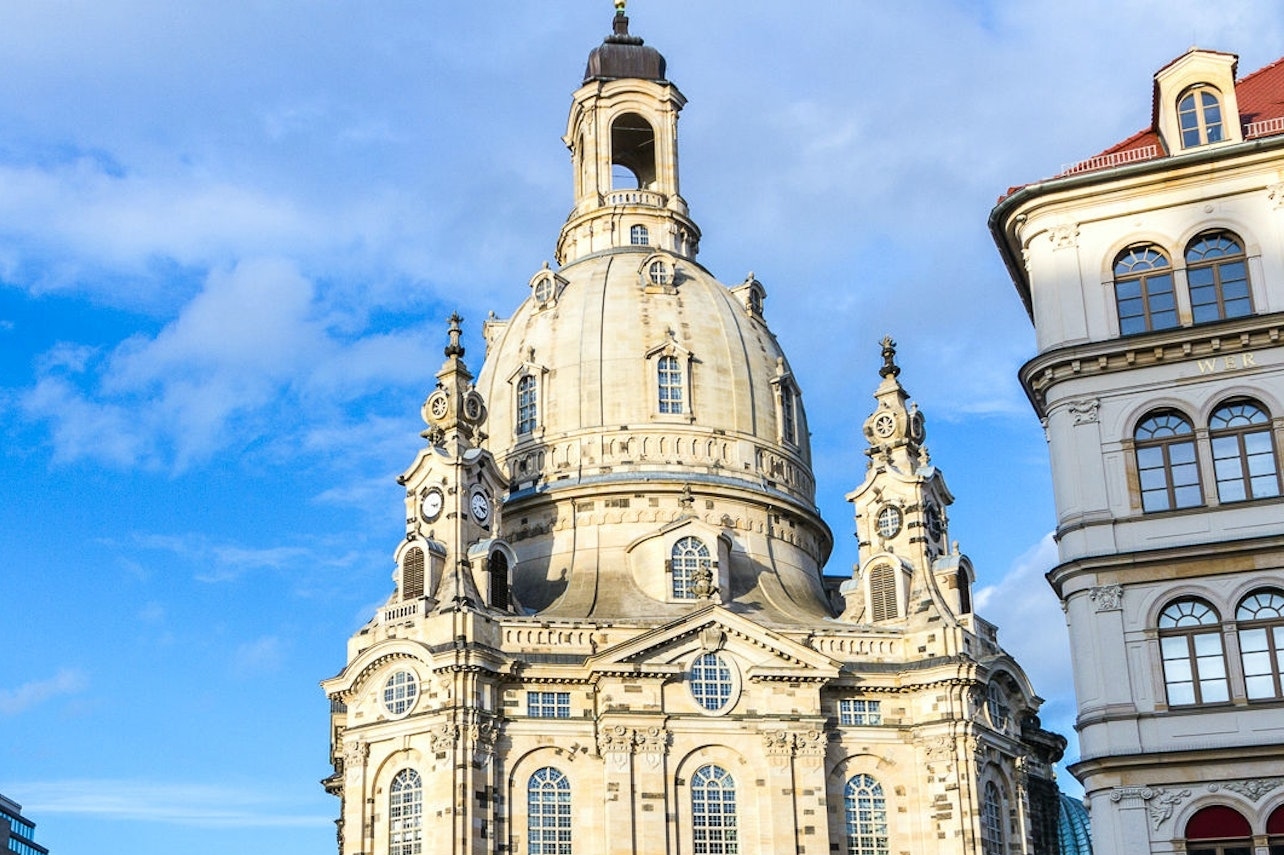
Entering the Dresden Frauenkirche, the first thing that catches your eye is its towering dome. Construction of this church began in 1726, designed by master carpenter George Bähr, and took 17 years to complete. The church stands 95 metres tall, and its massive sandstone dome weighs 12,000 tonnes, making it the largest stone dome north of the Alps—a true miracle in architectural history.
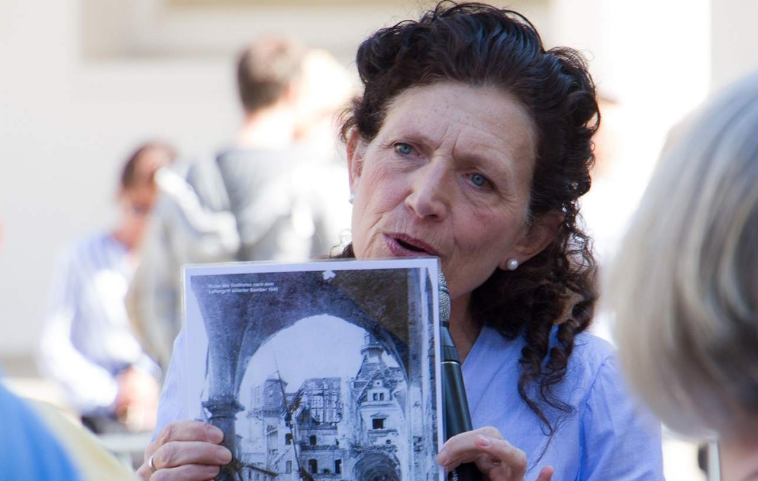
However, the church's fate has been tumultuous. In February 1945, Dresden was bombed by the Allied forces, and the Frauenkirche was reduced to ashes, leaving only a 13‑metre‑high ruin. After the war, the rubble was preserved as a war memorial. It was not until 1994 that the reconstruction officially began. During the rebuilding process, craftsmen collected over 8,500 original stones from the debris and used computer‑assisted technology to reassemble them. The random arrangement of old and new stones created a unique yellow‑and‑black pattern on the church's exterior—the black sections are the marks left by the wartime fire.
The interior of the church is equally awe‑inspiring. The altar area deliberately retains some unrepaired traces of the war, reminding people not to forget history. The church also houses a 20‑tonne pipe organ with 4,873 pipes, upon which the father of music, Johann Sebastian Bach, once performed. Today, whenever the organ sounds, it feels like a prayer for peace and a remembrance of those who have passed.
[Itinerary Reference]:
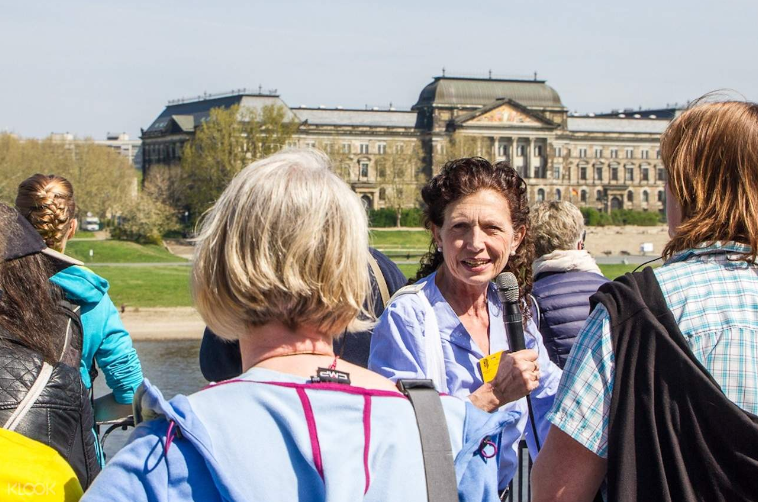
Departure: 10:30, meet at Dresden Information: Neumarkt 2, 01067 Dresden, Germany. Look for a guide holding a sign reading 'Glanzlichter Dresdens' near the escalator in the building's basement. Please arrive 10 minutes before the departure time.
Attraction/Experience: Frauenkirche, visit the interior of the Frauenkirche (altar, paintings, lower church)
Attraction/Experience: Guided tour, Sophienstraße
Return: 12:30, arrive back at Dresden Information: Neumarkt 2, 01067 Dresden, Germany.
The itinerary may be adjusted depending on traffic and weather conditions.
Zwinger Palace: The Luxurious Hall of Baroque Art
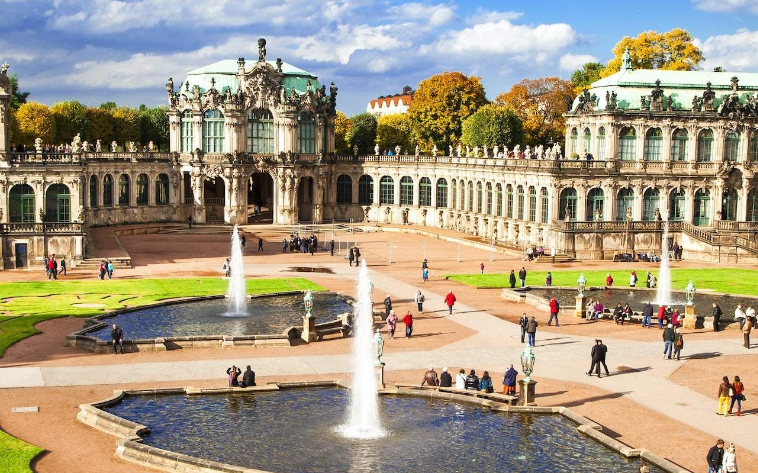
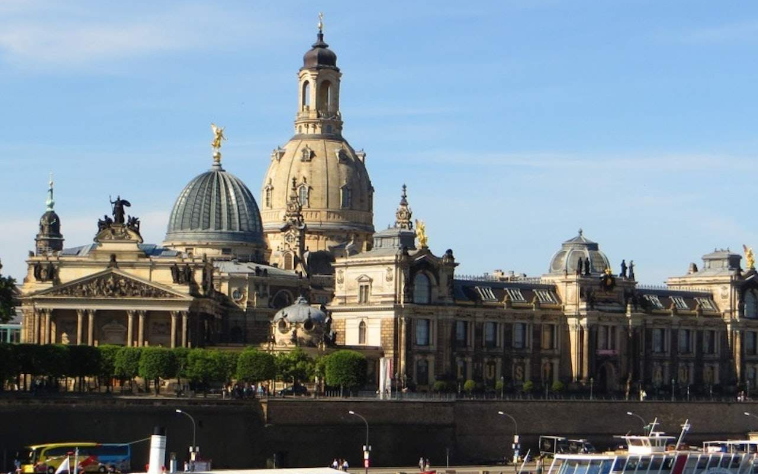
Unlike the solemnity of the Frauenkirche, the Zwinger Palace showcases the ultimate luxury of Baroque art. Designed by architect Matthäus Daniel Pöppelmann, this palace was built between 1709 and 1732 and was originally a festival venue for Augustus the Strong, Elector of Saxony.
The most striking feature of the Zwinger Palace is its Crown Gate. This 31‑metre‑high gate is topped with a gilded dome, and its pillars are carved with four statues of Atlas figures symbolising Polish royal power, creating a majestic presence. The palace also houses a Glockenspiel Pavilion, equipped with 40 Meissen porcelain bells that automatically play Baroque tunes every hour, adding a lively touch to this ancient palace.
The Zwinger Palace is not only a masterpiece of architectural art but also a treasure trove of art collections. It houses the Old Masters Picture Gallery, featuring world‑renowned paintings such as Raphael's 'Sistine Madonna' and Vermeer's 'Girl Reading a Letter at an Open Window'. In addition, there is a Porcelain Collection, displaying over 20,000 pieces of Chinese, Japanese, and Meissen porcelain collected by Augustus II, including a rare Northern Song Dynasty Ru‑ware brush washer, which is considered the museum's most prized piece.
 Merchant Information


 Product Reviews
 Tourist2026
 I took loads of candid shots of the sunlight streaming through the Frauenkirche’...
- Tourist2026My youngest was obsessed with the tiny fountain in the Zwinger courtyard, kept p...
- Tourist2026My husband got me a small bunch of pale white roses from a street vendor outside...

 Date of Use(Berlin local time)

 Deals